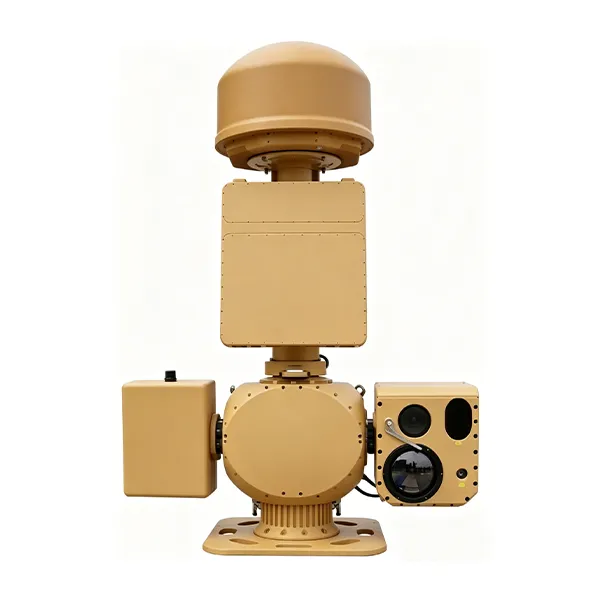
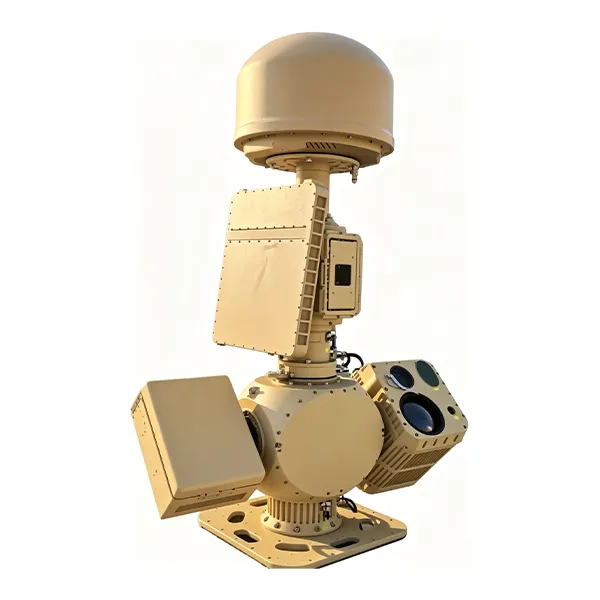
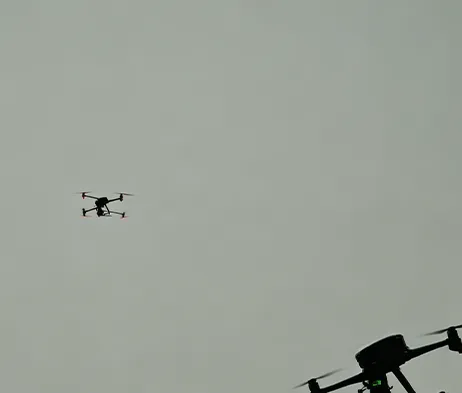
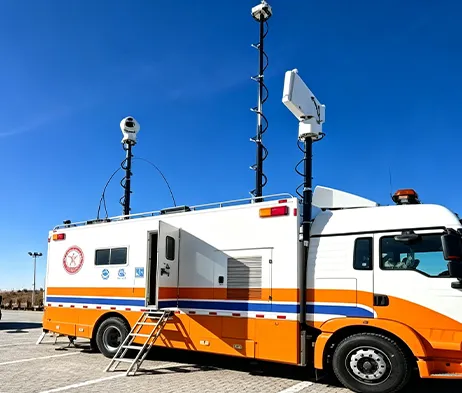
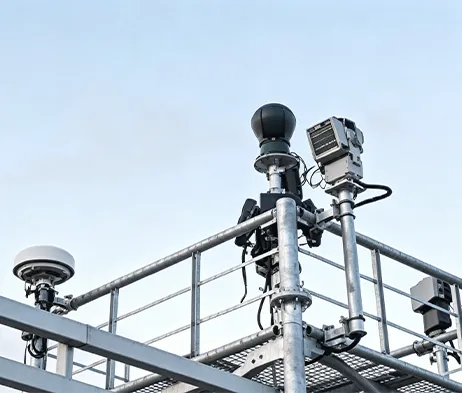
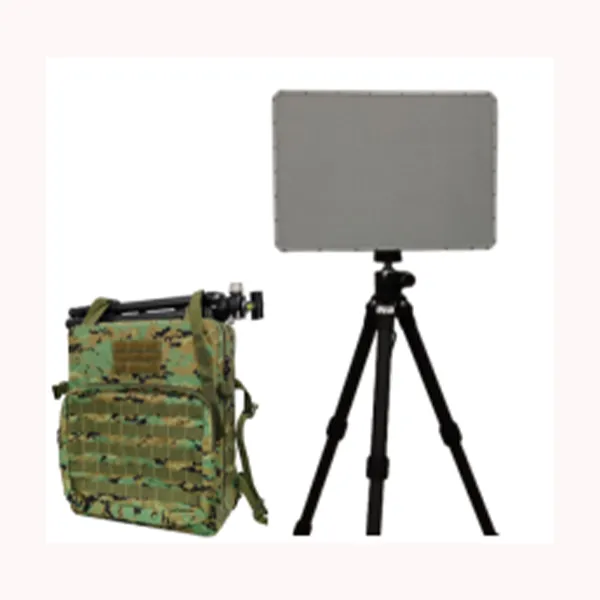
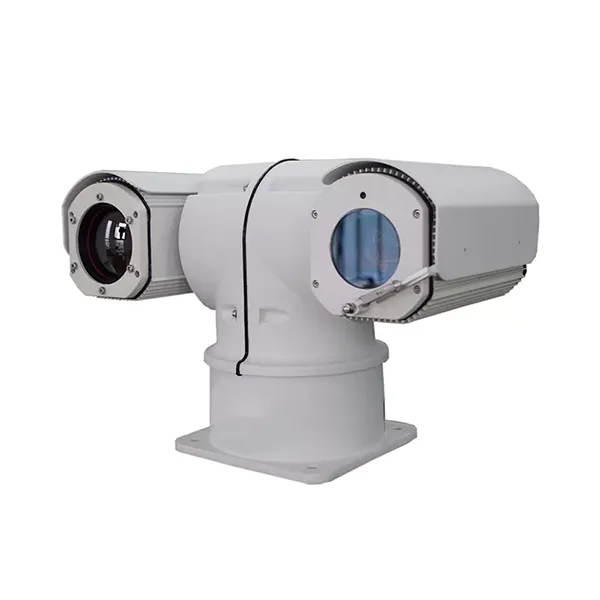
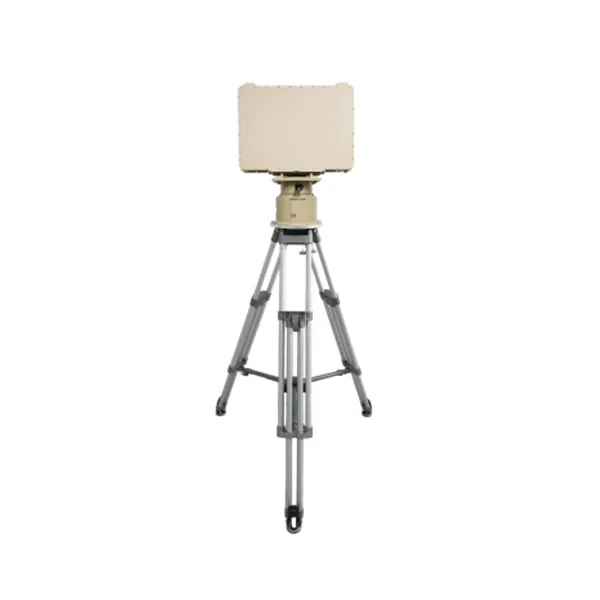
A counter-UAS radar system is a complete detect-track-respond platform — not a standalone sensor. Here's how one actually works, what's really inside it, and how to source one from a manufacturer that builds every core component in-house.
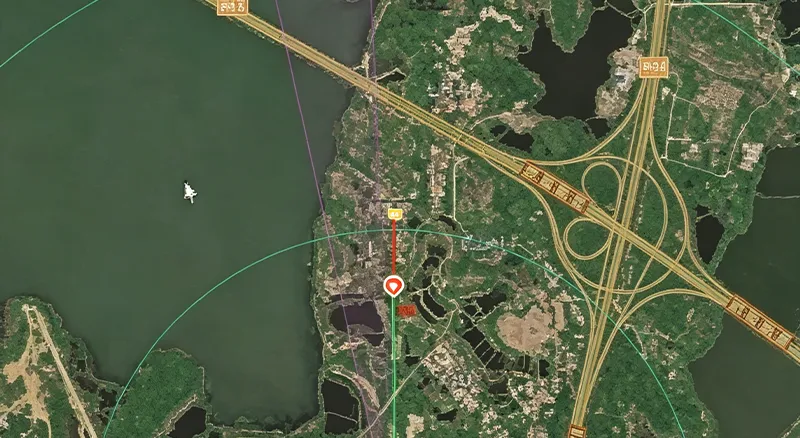
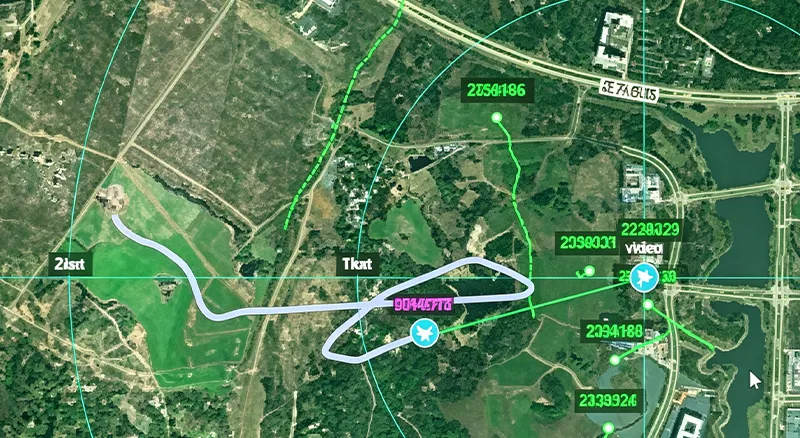
In short: A counter-UAS radar system combines radar detection, spectrum (RF) direction-finding, electro-optical/infrared tracking, and — where legally authorized — an interference-response subsystem into one coordinated platform. Midradar's MR-AUS70-RD05-RF10 integrates X-band radar (≥5 km detection range), RF spectrum direction-finding (≥10 km), cooled thermal-imaging tracking (≥4 km), and a 300 MHz–6 GHz interference-response module (≥5 km range) under a single RGS2000 management platform. This is a fundamentally different purchase decision from a standalone detection radar — it's for sites that need authorized response capability, not just awareness. If you only need detection and tracking, see our Drone Detection Radar guide instead.
What Is a Counter-UAS Radar System?
Not a sensor — a full detect-track-respond platform. Here's the difference that actually matters when you're buying one.
Detection Only
Standalone Detection Radar
Radar (and sometimes RF) sensing only — tells you a drone is present, where, and how far
No response/interference capability — no special legal authorization needed to operate
Right fit: airports, borders, critical infrastructure that need awareness, not active response
Four stages happen in sequence, from first detection to logged resolution — plus one platform capability that runs continuously underneath all of them. Based on the real architecture of Midradar's MR-AUS70-RD05-RF10.
RGS2000 Platform — Continuous Data Fusion, Electronic-Map Display & Unattended Operation (runs underneath all four stages, not a separate step)
The real sequence per Midradar's MR-AUS70-RD05-RF10 specification: spectrum + radar detection → EO/IR verification and AI classification → authorized RF/navigation response → recorded resolution. Stage 3 applies only where the operator holds legal authorization to use it.
Why "detect + respond" is a different system than "detect only"
A standalone detection radar answers one question: is there a drone, and where? A full counter-UAS system has to answer a second question just as reliably: once a target is confirmed, what happens next? That second question is why counter-UAS systems add an entire verification layer (electro-optical tracking + AI classification) before any response is triggered — acting on an unconfirmed radar return alone is how false alarms turn into wasted (or worse, misdirected) responses. The RGS2000 platform used in Midradar's MR-AUS70-RD05-RF10 fuses radar, spectrum, and EO/IR data continuously, throughout all four stages, specifically so that the response stage only ever fires against a verified, classified target.
RF interference vs. navigation (GNSS) spoofing — two different response mechanisms
RF interference targets the control link between the drone and its remote operator — it floods the drone's command-and-control frequency (typically in the 915 MHz–5.8 GHz range) so the operator loses the ability to steer it, usually triggering a "return-to-home" or auto-land failsafe. Navigation (GNSS) spoofing works differently — it targets the drone's own positioning system (GPS, BeiDou, GLONASS, or GALILEO), overriding the signals it uses to know where it is, which can be used for directional driving-away or enforcing a no-fly zone even against drones that don't rely on an active remote-control link. A full counter-UAS system typically needs both mechanisms, because they counter two different categories of drone (remote-piloted vs. autonomous/pre-programmed).
Inside the System: Real Technical Specifications
Full manufacturer-published specification table for Midradar's MR-AUS70-RD05-RF10 Counter-UAV System.
الطراز ونطاق العمل
الهدف النموذجي
DJI Phantom 4 وDJI Mavic 3 في ظروف جوية وكهرومغناطيسية جيدة
Source: Midradar's official MR-AUS70-RD05-RF10 product specification page.
Real Deployment Reference: Petrochemical Perimeter
The detect → verify → respond chain in practice — shown honestly, including what this specific deployment did and didn't include.
Verified Deployment
Detection-to-Response Workflow at a Coastal Petrochemical Tank Farm
Three MR-RDT20K radars cover an 8+ km perimeter at a large East Asian coastal refinery and tank storage complex, tracking up to 500 simultaneous targets across ground and low-altitude airspace. The real, documented workflow runs: radar detection → trajectory calculation → alert-zone trigger → automatic EO/IR camera slew-to-cue → operator verification → alarm handling with a full evidence package.
8+ km
perimeter covered
3 × MR-RDT20K
radar units deployed
500
simultaneous target tracks
6
step detect-to-alarm workflow
Scope note: this deployment's published workflow covers detection, automatic camera cueing, and operator-verified alarm handling — it does not describe use of an active RF-interference or navigation-suppression response module. For sites that need that additional response layer, see the MR-AUS70-RD05-RF10 specifications above.
What "manufacturer" actually means here — real facts from Midradar's own company record, not marketing language.
2015
Founded · HQ Qingdao, China
3
Production bases: Qingdao / Jinan / Xi'an
50+
Countries served worldwide
80+
Patents & software copyrights
Complete in-house technology control
Midradar independently develops its core radar components — TR modules, microwave frequency synthesizers, signal processors, algorithms, and display/control software — rather than integrating third-party radar cores. Over 30% of annual revenue is reinvested into R&D, and more than 60% of the R&D team are senior engineers in microwave technology, signal processing, AI, and software.
OEM / ODM and custom development
"If our standard products do not fully meet your requirements, we can modify existing designs or develop entirely new solutions — with rapid prototyping capabilities that deliver custom results faster than traditional manufacturers." — Midradar, Support page
Certifications & compliance
Midradar holds ISO 9001:2015 Quality Management System certification, CE marking for European compliance, and is recognized as a National High-Tech Enterprise in China. Every unit goes through supplier qualification, PCB AOI inspection, environmental stress screening, a 24-hour aging test, and functional testing/calibration before it ships.
Midradar's real production quality-control sequence, as published on the About page — applied to every unit before it ships.
Export experience & logistics
Products are deployed in more than 50 countries across Asia, the Middle East, Africa, and beyond. Midradar is fully licensed to export security and radar equipment, with an in-house export compliance team handling customs documentation and trade regulations, and works with freight forwarders for both air and sea freight with door-to-door coordination.
A note on regulation (general background, not legal advice)
RF-interference and GNSS-spoofing equipment is a regulated category in most countries, because it can affect radio communications and navigation signals beyond the intended target. Many jurisdictions restrict its purchase, import, and operation to specifically authorized government, military, law-enforcement, or licensed security operators — this is an industry-wide regulatory reality, not something specific to any one manufacturer. Buyers should confirm their own country's radio-frequency and counter-drone regulations, and their own authorization status, before specifying the response-layer components of a counter-UAS system; a standalone detection radar (no response module) typically does not carry the same regulatory restrictions.
Who Needs a Full Counter-UAS System
Real application scenarios published on Midradar's MR-AUS70-RD05-RF10 product page.
Aviation
أمن المطار على ارتفاع منخفض
Detection, verification, and authorized response layered around runways and approach paths in restricted low-altitude airspace.
Events
أمن مركز المؤتمرات
Temporary or standing protection for high-profile events and venues where unauthorized drone activity is a defined risk.
Critical Sites
حماية المرافق المقيدة
Full detect-track-respond coverage for facilities where unauthorized overflight itself is the primary threat to manage.
How to Choose a Counter-UAS Radar System
A procurement checklist covering technical fit, compliance, and manufacturer capability.
Response authorization — confirm whether RF interference and/or navigation suppression is legally authorized for your site and jurisdiction before specifying a full response-layer system.
Detection-layer scope — decide whether you need the full radar+RF+EO/IR+response stack, or whether a standalone detection radar meets the requirement.
Target profile — confirm the typical target class (consumer drones vs. more complex threats) against the system's rated detection and tracking ranges.
System integration — check whether the platform needs to interface with an existing C2 system or VMS, and whether open API support is required.
Customization / OEM needs — confirm whether the standard configuration meets your requirement or whether factory-side customization or rapid prototyping is needed.
Certification requirements — verify what import/use certifications your country requires for RF-interference-capable equipment, separate from the manufacturer's own ISO/CE credentials.
Delivery & logistics — confirm production lead time and international shipping method (air vs. sea freight) and customs support.
After-sales support — installation/commissioning, operator training, maintenance contracts, remote diagnostics, and spare-parts availability.
Midradar's Counter-UAS System Solutions
The full system, plus the standalone components it's built from.
What's the difference between a counter-UAS radar system and a standalone detection radar?
A standalone detection radar only tells you a drone is present, where, and how far — see our Drone Detection Radar guide. A full counter-UAS system adds RF spectrum direction-finding, EO/IR verification and AI classification, plus (where authorized) an active response layer — it's built to act on a confirmed threat, not just report one.
What's the difference between RF interference and navigation (GNSS) spoofing?
RF interference disrupts the control link between the drone and its remote pilot, usually forcing a return-to-home or auto-land response. Navigation spoofing targets the drone's own GPS/BDS/GLONASS/GALILEO positioning, which also works against autonomous or pre-programmed drones that don't rely on an active control link.
Is the interference/navigation-suppression response function legal to use?
This varies significantly by country and jurisdiction — RF interference and GNSS suppression equipment is regulated, and in many places its use is restricted to specifically authorized government, military, or security operators. Please verify your local radio-frequency and counter-drone regulations before specifying or operating the response module; Midradar can advise on the technical configuration but cannot advise on your local legal authorization.
Sourcing & Manufacturer
Can Midradar customize a counter-UAS system for our specific site?
Yes — Midradar's standard policy is to modify existing designs or develop new solutions when standard products don't fully meet a project's requirements, supported by in-house rapid-prototyping capability.
What certifications does Midradar hold?
Midradar holds ISO 9001:2015 Quality Management System certification, CE marking for European compliance, and is recognized as a National High-Tech Enterprise in China.
Does Midradar export to our region?
Midradar's products are deployed in more than 50 countries across Asia, the Middle East, Africa, and beyond, and the company is fully licensed to export security and radar equipment with an in-house export compliance team.
What's the typical lead time and shipping method?
International shipments move by air or sea freight through Midradar's freight-forwarder network with door-to-door customs coordination; exact lead time depends on configuration and order volume — contact Midradar for a project-specific timeline.
What after-sales support is included?
Every product carries a manufacturing-defect warranty (extended options available), field-engineer installation and commissioning, structured operator training, flexible maintenance contracts, 24/7 technical hotline and remote diagnostics, and lifetime technical support after the warranty period ends.
Ready to Specify a Counter-UAS Radar System?
Tell us about your site and its authorization status, and our engineering team will recommend the right configuration — detection-only or full detect-and-respond.